BRUSH PENS USING TECHNIQUES

BRUSH PENS USING TECHNIQUES
Brush pens have the versatility of traditional water color packed into one easy-to-carry body. It uses water-based ink, so keep a little glass of water beside you as you work. When you dip the brush tips in water, you'll dilute the ink which produces lighter shades. Remember: the longer you dip the brush tip in water, the lighter the outcome. Play around with water until you become familiar with its effect on your brush pens. This will be very useful when you’re making color washes and shading.
Water color brush pens are some of the best art mediums to work with. They're a bit tricky at first, but don't be intimidated. With a bit of practice and the right materials, you can create a lot of beautiful masterpieces with these pens. Have fun with your brush pens and as always, free your creativity!

HOW TO USE:
- Unscrew the top and fill the chamber with water.
- Squeeze a few drops of water onto the dry colors you plan to use to "wake them up".
- Don't squeeze while you paint- the chamber will naturally release enough water to maintain moisture as you go.
- When you're finished, simply wipe off excess paint, squeeze some water, and wipe some more until you no longer see any color coming off the brush.
- Smooth the bristles before storing to keep the brushes in good condition.

New to using Brush Pens? Here are 6 Brush Pens using techniques you need to know.
BLENDING:
The Brush pens allows you to use the way you would a traditional watercolor set. Because the water brush’s barrel can be filled with water, just apply a little or a lot to moisten your surface before painting to blur what you have already painted. Or, use it like a paintbrush and dip it into the ink on your palette and paint right on a dry surface.

LETTERING:
The brush pen tip is especially well-suited for hand lettering. The tip can be manipulated to create wide, medium, or very fine lines. You can draw the letters in one hue and then layer other colors on top to give the letters more dimension. Because it have a barrel that’s like a pen, they give you the control you need for lettering.

ON WATERCOLOR PAINTINGS :
We are always searching for ways to add interest to our water colors. It is an excellent way to do this especially for complementing large solid areas with specifics or for putting in patterns and textures.

GLAZING :
One of the best things about Brush Pen is how great they are for glazing. Since they use water-soluble pigments, you can thin them with water and add multiple layers of color, to get the same hue for a darker shade or a different color for transparency that allows you to see the first color under the second.

COLOR MIXING :
Due to their fluidity, it can be mixed right on your surface as you are working. This causes various hues to appear and can make for some interesting effects and “happy accidents.”

When you want to achieve softer color transitions, get new hues, or control a color’s saturation, try using a palette for color mixing. Dab the colors on your palette and mix them together or add a little water to expand the amount of paint you have to work with.

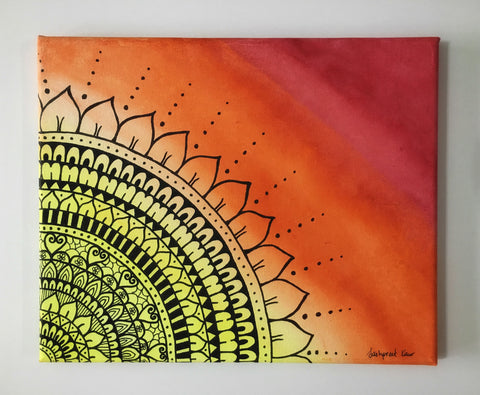
WATERCOLOR BACKGROUND MANDALA & ZENTANGLE:
Mandala is an Meditative Art and Zentangles are an easy-to-learn, relaxing, and fun way to create beautiful images by drawing structured contained patterns. Here we learn to use Brush Pens for Watercolor Background effects.
Step 1: Start with your first color and color in a section of the sheet protector.
Step 2: Add each additional color underneath.
Step 3: Lightly spray water over the sheet protector.
Step 4: Flip the sheet protector over on top of a piece of watercolor paper and spread the water around.
Step 5: Keep spreading until their is little to no white space left between the colors.
Step 6: Slowly peel the sheet protector away from the watercolor paper.
Step 7: Use a gold paint pen or black fine liner to draw a doodle or mandala.

There’s so much you can do with brush pens! Which trick or technique are you excited to try out first? If you want to know more about other media, refer these links:
Comments
Post a Comment